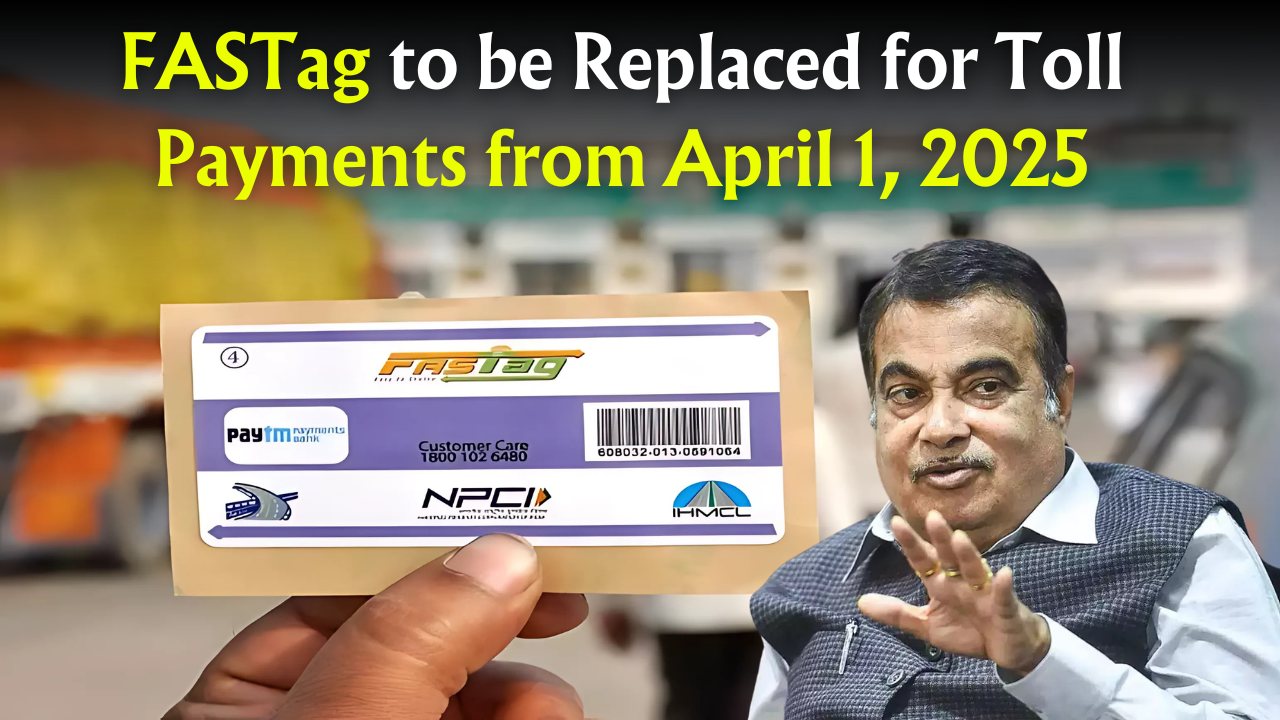
(FASTAG Toll Payment) : The Indian government is set to revolutionize toll collection once again, announcing the phase-out of FASTag from April 1, 2025. A new, advanced toll collection system will replace FASTag, eliminating the need for RFID-based payments. This transition is aimed at improving efficiency, reducing congestion, and enhancing user convenience. Here’s everything you need to know about this major shift in toll payment systems.
Why is FASTag Being Replaced?
The government’s decision to replace FASTag is driven by multiple factors. While FASTag improved toll collection speed and reduced cash transactions, certain challenges remained. The new system is expected to address these issues effectively.

Key Reasons for FASTag Replacement:
- Enhanced Accuracy – The new system will use GPS-based or ANPR (Automatic Number Plate Recognition) technology for seamless toll collection.
- Reduced Fraud – Cases of FASTag cloning and misuse will be eliminated with the advanced system.
- No Stopping at Toll Plazas – Vehicles will not need to slow down or stop for payments, reducing congestion and travel time.
- Better Traffic Flow – Faster processing will improve movement on highways, benefiting both private and commercial vehicles.
- Unified Payment System – The upcoming system will integrate multiple payment methods, making transactions smoother.
What is the New Toll Collection System?
The government is expected to implement a GPS-based toll collection system or ANPR technology. These methods will allow automated toll deductions based on vehicle movement, eliminating the need for physical toll booths.

Expected Features of the New System:
- GPS-Based Tolling – Charges will be deducted based on actual road usage rather than fixed points.
- Automatic Number Plate Recognition (ANPR) – High-resolution cameras will scan number plates and deduct tolls directly.
- Linking with Vehicle Registration – Payments will be auto-debited from linked bank accounts or digital wallets.
- Nationwide Integration – The new system will be implemented across all major highways and toll roads.
- No Need for Physical Tags – Unlike FASTag, there will be no need for RFID stickers.
Comparison: FASTag vs. New Toll Collection System
| Feature | FASTag | New System |
|---|---|---|
| Technology Used | RFID | GPS / ANPR |
| Stopping at Toll | Required | Not Required |
| Fraud Risk | Possible cloning | Minimal to none |
| Payment Process | Linked to wallet | Auto-deduction |
| Convenience | Moderate | High |
| Implementation | Physical tag required | Digital tracking |
How Will This Affect Vehicle Owners?
With the new system replacing FASTag, vehicle owners will experience a significant change in toll payments. Here’s how it will impact them:

- No Need for FASTag Stickers – Drivers won’t have to install RFID stickers on their vehicles.
- Automatic Payments – Toll charges will be deducted automatically without any manual intervention.
- Seamless Highways – No more waiting at toll booths, reducing travel time.
- Better Cost Efficiency – GPS-based tolling ensures you pay only for the distance traveled.
What Should Vehicle Owners Do?
To prepare for this transition, vehicle owners should:
- Ensure Vehicle Registration is Updated – The new system will likely link toll payments to registration details.
- Link Bank Account or Digital Wallet – Payments will be auto-debited, so it’s important to have a valid payment method linked.
Stay Informed About Implementation – The government will announce official procedures closer to the rollout date.
See More : New Honda Activa E Electric Scooter
Key Benefits of the New Toll Collection System
| Benefit | Explanation |
|---|---|
| Faster Travel | No stopping at toll plazas improves journey speed. |
| Reduced Traffic Congestion | Continuous movement prevents roadblocks at toll points. |
| Increased Security | Eliminates risk of FASTag fraud and misuse. |
| Accurate Payments | Charges will be based on actual distance traveled. |
| Convenience | No need for separate tags or wallets, making the system more user-friendly. |
Challenges and Concerns
While the new system offers numerous benefits, certain challenges remain:
- Implementation Costs – Setting up nationwide GPS or ANPR infrastructure will require significant investment.
- Data Privacy – GPS tracking of vehicles may raise privacy concerns among users.
- Adaptation Period – Users will need time to adjust to the new technology.
- Technical Glitches – Initial phases may experience errors in toll deductions or plate recognition.
Government’s Roadmap for Implementation
The government has already initiated pilot projects for the new toll collection system. Here’s a timeline for the expected transition:
| Phase | Timeline | Description |
|---|---|---|
| Pilot Testing | 2024 | Trial runs on selected highways to assess efficiency. |
| Infrastructure Setup | Early 2025 | Installation of GPS and ANPR systems nationwide. |
| User Registration | March 2025 | Vehicle owners link payment methods. |
| Official Launch | April 1, 2025 | FASTag phased out, new system goes live. |
| Nationwide Rollout | Mid-2025 | Complete implementation across all highways. |
Impact on Commercial and Transport Vehicles
The commercial transportation sector will also experience significant changes with the new toll system. Key impacts include:

- Improved Logistics Efficiency – Faster movement reduces delivery time.
- Fair Toll Charges – Payments based on actual distance rather than fixed charges.
- Easier Compliance – Companies won’t need to manage multiple FASTag accounts.
What Transport Operators Should Do:
- Register vehicles under the new system.
- Update fleet management systems for automatic toll deductions.
- Educate drivers on the new process to avoid confusion.
Frequently Asked Questions (FAQs)
1. Will FASTag continue to work after April 1, 2025?
No, FASTag will be phased out, and the new toll collection system will replace it.
2. What happens if my vehicle is not registered under the new system?
You may face penalties or manual toll payment processes until registration is complete.
3. Will this system be more expensive for users?
No, the goal is to make toll payments fairer by charging based on actual road usage.
4. Can private vehicles opt out of the new system?
No, all vehicles will be required to comply with the new toll payment method.
5. What if there are errors in toll deductions?
A dispute resolution mechanism will be set up for incorrect charges.
India’s move towards a GPS-based or ANPR toll collection system marks a significant step in improving road travel efficiency. While the transition from FASTag may take some time, the benefits of seamless toll payments, reduced congestion, and fairer pricing make it a welcome change. Vehicle owners should stay informed and prepare for the shift to avoid any disruptions.

With April 1, 2025, set as the deadline for FASTag’s phase-out, now is the time to get ready for the future of toll payments.